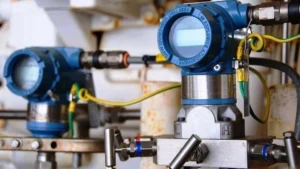
Coriolis Flow Meter : Working Principle, Benefits, and Industrial Applications
Read Article
Coriolis Flow Meter : Working Principle, Benefits, and Industrial Applications
Accurate flow measurement is essential for maintaining process efficiency, product quality, and operational reliability in industrial facilities. In industries such as oil and gas, petrochemicals, power generation, and chemical processing, selecting the right flow measurement technology can directly influence production performance and operating costs.
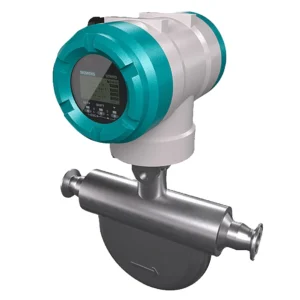
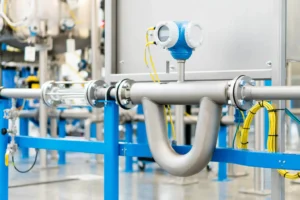
A Coriolis flow meter is an advanced instrument that measures the mass flow rate of a fluid directly. Depending on the meter design and application, it can also provide measurements of fluid density and temperature. These capabilities make it a valuable option for industrial processes that require reliable measurement and precise process control.
In this guide, we explain how Coriolis flow meters work, their main advantages, their industrial applications, and the technical factors engineers should consider when selecting a suitable instrument.
What Is a Coriolis Flow Meter?
A Coriolis flow meter is an industrial instrument designed to measure the mass flow rate of liquids or gases using the Coriolis effect.
Unlike conventional flow meters that primarily measure volumetric flow, a Coriolis meter measures the mass of fluid passing through the instrument. This distinction is important when process conditions, fluid density, or product composition affect measurement requirements.
Many Coriolis meters can also measure fluid density and temperature, depending on the instrument configuration.
These measurements are particularly useful in industrial applications where accurate material transfer, process consistency, and product quality are important.
Common applications include:
Crude oil and petroleum product measurement
Chemical dosing and blending
Petrochemical processing
Industrial liquid transfer
Batch processing and production control
Selected natural gas and industrial gas applications
The appropriate meter depends on the fluid properties, operating conditions, required accuracy, and installation constraints.
How Does a Coriolis Flow Meter Work?
The operating principle of a Coriolis flow meter is based on the interaction between moving fluid and vibrating measurement tubes.
Inside the instrument, one or more tubes vibrate at a controlled frequency. When fluid passes through these tubes, the movement of the fluid produces forces that cause measurable changes in the tubes’ motion.
Sensors detect these changes and transmit signals to the meter’s electronics. The instrument processes the signals to calculate the mass flow rate.
The basic measurement process involves three stages.
1. Controlled Tube Vibration
The meter’s internal tubes are driven to vibrate at a specific frequency. The vibration characteristics depend partly on the mechanical properties of the measurement system and the fluid inside it.
2. Detection of the Coriolis Effect
As the fluid moves through the vibrating tubes, Coriolis forces produce a measurable change in their motion. Sensors detect the resulting phase difference or time difference between signals from different points on the tubes.
3. Calculation of Mass Flow
The meter’s electronics interpret the measured signals and calculate the mass flow rate. Depending on the model, additional calculations can provide density and temperature measurements.
Because mass flow is measured directly, the instrument can be particularly useful in applications where volumetric measurements alone are insufficient.
Key Benefits of Coriolis Flow Meters
Coriolis technology offers several advantages for industrial measurement. However, its suitability depends on the application and the instrument’s specifications.
1. Direct Mass Flow Measurement
One of the main advantages of a Coriolis flow meter is its ability to measure mass flow directly.
In many industrial processes, mass flow provides a more useful measurement than volume alone. For example, chemical dosing and product blending may require a specific mass of material rather than a fixed volume.
Direct mass measurement can simplify process calculations and reduce reliance on separate density measurements for converting volumetric flow into mass flow.
2. Additional Process Measurements
Many Coriolis instruments can measure density and temperature in addition to mass flow.
These additional measurements can help operators monitor fluid properties, identify process variations, and improve control over production operations.
The available measurements depend on the selected model and its configuration.
3. No Traditional Mechanical Flow Obstruction
Coriolis meters do not normally require a conventional obstruction, such as an orifice plate, to generate the primary measurement signal.
However, the measuring tubes remain part of the flow path. Their geometry, pressure drop, and suitability for the process must still be evaluated during instrument selection.
4. Reduced Dependence on Fluid Density Compensation
Because the instrument measures mass flow directly, it does not need to calculate mass flow solely by multiplying volumetric flow by a separately measured density value.
This can simplify measurement arrangements in applications where mass flow is the primary process variable.
5. Integration With Industrial Control Systems
Coriolis flow meters can be integrated into industrial automation and process control systems.
Depending on the model, available communication options may include 4–20 mA signals, pulse outputs, HART, or digital fieldbus protocols.
Integration with a PLC, DCS, or supervisory control system allows measured values to support process monitoring, alarms, batch control, and operational reporting.
Engineers should verify communication compatibility before specifying the instrument.
Industrial Applications of Coriolis Flow Meters
Coriolis flow meters are used across several industries where mass flow measurement supports production, transfer, or process control.
Oil and Gas
In oil and gas facilities, Coriolis meters can be used to measure liquid hydrocarbons, chemical injection streams, and other compatible process fluids.
Potential applications include:
Chemical injection and dosing
Liquid hydrocarbon transfer
Production process monitoring
Fuel measurement
Selected gas measurement applications
For custody transfer or fiscal measurement, the complete measurement system must satisfy the applicable contractual, regulatory, and metrological requirements. A Coriolis meter should not automatically be assumed suitable for every fiscal metering application.
Petrochemical and Chemical Processing
Chemical plants frequently handle fluids with different densities, viscosities, and compositions.
A Coriolis flow meter can support accurate ingredient dosing, batch production, blending, and monitoring of material consumption.
Direct mass flow measurement can be particularly beneficial when recipes depend on precise quantities of individual components.
Before selecting a meter, engineers should assess chemical compatibility, operating pressure, temperature, viscosity, and the possibility of corrosive or abrasive conditions.
Power Generation
Power plants use a range of measurement technologies to monitor fuel, water, chemicals, and other process fluids.
Coriolis meters may be appropriate for selected liquid fuel measurement, chemical dosing, and auxiliary process applications.
The final choice should account for the fluid characteristics, operating conditions, required measurement range, and plant control architecture.
Water and Industrial Utilities
Coriolis technology can be used in certain water and utility applications, particularly where mass flow or density information is required.
However, conventional electromagnetic, ultrasonic, or differential-pressure flow meters may be more economical or technically appropriate for other water measurement duties.
The best technology is the one that satisfies the actual process requirements rather than the one with the greatest number of features.
Coriolis Flow Meter vs. Other Flow Measurement Technologies
Selecting a flow meter requires comparing measurement principles and understanding their suitability for the intended process.
Technology
Primary Measurement
Typical Strength
Important Consideration
Coriolis flow meter
Mass flow
Direct mass measurement and, on many models, density measurement
Initial cost, pressure drop, and installation requirements
Electromagnetic flow meter
Volumetric flow
Suitable for many conductive liquids
Requires sufficient electrical conductivity
Ultrasonic flow meter
Volumetric flow or velocity, depending on design
Some designs allow measurement without intrusive installation
Performance depends on design, fluid, and installation conditions
Differential-pressure flow meter
Differential pressure used to calculate flow
Established technology with broad industrial use
Requires suitable sizing and appropriate compensation
Turbine flow meter
Volumetric flow
Can provide good performance in suitable clean-fluid applications
Mechanical components and fluid conditions affect suitability
No single technology is the best choice for every application.
For example, a Coriolis meter may be attractive when direct mass measurement is important, while an electromagnetic meter may be more appropriate for a conductive liquid in a large pipeline.
A technical comparison should consider the full cost of ownership, including installation, calibration, maintenance, and operating requirements.
How to Select the Right Coriolis Flow Meter
Choosing a suitable Coriolis flow meter requires a detailed understanding of the process and the required measurement performance.
1. Identify the Fluid
Start by identifying the fluid being measured and documenting its relevant properties.
Important information includes:
Fluid composition
Density and viscosity
Corrosiveness
Presence of suspended solids or entrained gas
Expected changes in composition
These properties help determine whether the proposed instrument is suitable for the application.
2. Define Operating Conditions
Specify the normal and maximum flow rates, operating pressure, temperature range, and expected process variations.
The meter must operate within its specified limits throughout the required operating range.
Engineers should also assess pressure drop, especially in applications involving viscous fluids or limited available differential pressure.
3. Establish Accuracy Requirements
Different applications require different levels of measurement performance.
Chemical dosing, production monitoring, inventory measurement, and custody transfer can have significantly different requirements.
Define the required accuracy, repeatability, turndown, and applicable verification or calibration requirements before selecting the instrument.
4. Check Materials and Process Connections
Wetted materials must be compatible with the fluid under actual operating conditions.
The selection process should also consider pipe size, connection type, pressure rating, installation orientation, and mechanical support.
For hazardous areas, the instrument’s certifications and electrical installation requirements must match the site’s classification.
5. Confirm Control System Compatibility
Determine how the measured values will be used by the plant’s control system.
Verify the required output signals, communication protocols, power supply, diagnostic capabilities, and integration requirements.
This step is particularly important when the meter will operate within a larger instrumentation or metering system.
6. Evaluate Maintenance and Lifecycle Costs
The purchase price is only one part of the total cost of ownership.
Consider calibration requirements, inspection access, spare parts availability, technical support, installation work, and the consequences of measurement downtime.
A properly selected instrument can help improve measurement reliability while reducing avoidable operational disruption.
Integration With Industrial Metering and Automation Systems
In many industrial projects, a flow meter is only one component of a complete measurement solution.
Depending on the application, a metering system may also include pressure and temperature transmitters, control valves, isolation valves, signal processing equipment, flow computers, and communication interfaces.
A properly engineered system brings these components together to provide consistent measurement, process visibility, and reliable control.
For example, in a chemical dosing application, the flow meter can provide mass flow data to a PLC. The control system can then use this information to regulate a dosing pump or valve and monitor whether the required quantity has been delivered.
In more complex installations, the integration process may involve instrument selection, engineering documentation, control system configuration, factory acceptance testing, site installation, and commissioning.
Successful implementation requires compatibility between the instrument, process conditions, control architecture, and project specifications.
Common Challenges and Maintenance Considerations
Although Coriolis flow meters offer significant benefits, their performance still depends on proper installation and operating conditions.
Entrained gas: Gas bubbles in liquid applications can affect measurement stability. The potential impact depends on the meter design and the amount of gas present.
Vibration: External mechanical vibration can interfere with measurement in some installations. Proper mounting and installation practices help reduce this risk.
Incorrect sizing: An unsuitable meter size can lead to excessive pressure drop, poor measurement performance, or operation outside the preferred flow range.
Material incompatibility: Incompatible wetted materials can cause corrosion, equipment damage, or contamination.
Insufficient verification: Periodic inspection and calibration or verification should follow the manufacturer’s recommendations and the requirements of the application.
A maintenance program should include reviewing diagnostic information, checking process conditions, inspecting connections, and confirming measurement performance at appropriate intervals.
A Coriolis flow meter is an important option for industrial applications that require direct mass flow measurement and, where supported, additional information about fluid density and temperature.
Its potential benefits include improved process visibility, simplified mass-based calculations, and integration with modern automation systems. However, achieving reliable performance requires appropriate instrument sizing, material selection, installation, and configuration.
For oil and gas, petrochemical, and other process industries, the selection process should begin with a clear understanding of the fluid, operating conditions, measurement objectives, and system integration requirements.
Phakarin Global supports industrial projects through engineering, procurement, instrumentation-related services, and system integration capabilities. Contact our team to discuss your application requirements and identify suitable equipment and technical solutions for your project.