Industrial pump maintenance is essential for maintaining reliable fluid transfer, reducing unexpected downtime, and extending equipment service life. Pumps operate in demanding environments across oil and gas, petrochemical, power generation, water treatment, and manufacturing facilities.
When a pump develops a mechanical or operational problem, the consequences can include reduced flow, excessive energy consumption, equipment damage, and production interruptions.
A structured maintenance strategy helps identify early warning signs, address common failures, and keep pumping systems operating within their design conditions.
This article examines eight common industrial pump problems and explains practical approaches to preventing and resolving them.
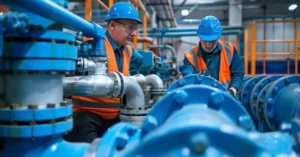
1. Pump Cavitation
Cavitation occurs when the pressure of a liquid falls below its vapor pressure, causing vapor bubbles to form. These bubbles collapse when they enter higher-pressure regions inside the pump.
This can damage internal surfaces and reduce pump performance.
Common warning signs:
- Unusual noise resembling gravel or crackling
- Excessive vibration
- Reduced discharge pressure
- Surface damage to the impeller
- Unstable pump performance
Maintenance solutions:
- Verify that the available NPSH meets the pump requirements.
- Inspect suction piping for restrictions.
- Clean blocked strainers and filters.
- Check liquid temperature and suction pressure.
- Confirm that the pump operates within its intended flow range.
2. Mechanical Seal Leakage
Mechanical seals prevent pumped fluid from escaping along the rotating shaft. Seal failure can cause leakage, environmental concerns, and equipment damage.
Common causes include:
- Dry running
- Incorrect installation
- Shaft misalignment
- Excessive vibration
- Incompatible seal materials
- Poor lubrication or inadequate flushing
Maintenance solutions:
Inspect seal condition regularly, verify installation procedures, and confirm that the selected seal materials are compatible with the process fluid. Also investigate the operating conditions that may have contributed to the failure rather than replacing the seal alone.
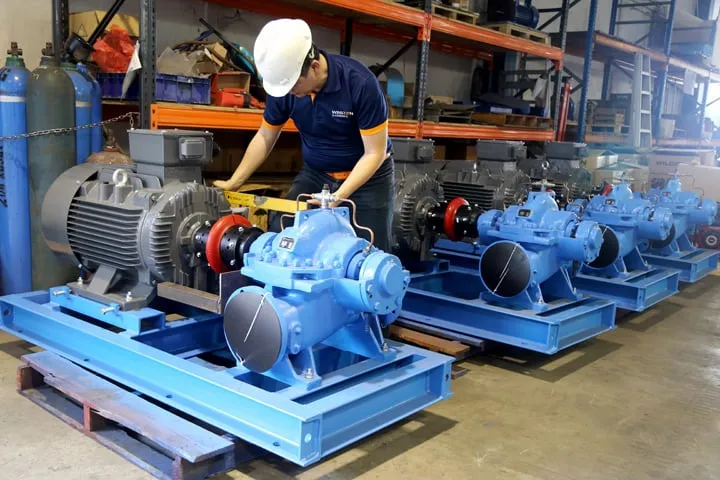
3. Bearing Failure
Bearings support the rotating shaft and help maintain stable pump operation. Bearing deterioration can increase friction, vibration, and operating temperature.
Typical causes include:
- Insufficient or excessive lubrication
- Contaminated lubricant
- Misalignment
- Excessive mechanical loads
- Incorrect bearing installation
Maintenance solutions:
Monitor bearing temperature and vibration, follow the manufacturer’s lubrication recommendations, and inspect bearings during scheduled maintenance. Oil analysis can also help identify contamination and abnormal wear.
4. Excessive Pump Vibration
Abnormal vibration is an important indicator of potential mechanical or hydraulic problems.
Possible causes include:
- Shaft misalignment
- Impeller imbalance
- Loose mounting bolts
- Bearing deterioration
- Cavitation
- Pipe strain
Maintenance solutions:
Use vibration analysis to identify abnormal operating patterns. Check shaft alignment, inspect the impeller, verify foundation integrity, and examine connected piping for excessive mechanical stress.
Vibration monitoring can help identify developing problems before they result in significant equipment damage.
5. Reduced Flow Rate or Discharge Pressure
A reduction in pump flow or discharge pressure can affect the entire process system.
Common causes include:
- Blocked suction filters
- Impeller wear
- Air entering the suction line
- Incorrect valve positions
- Excessive system resistance
- Operation outside the pump’s design conditions
Maintenance solutions:
Compare actual operating measurements with the pump performance curve. Inspect suction and discharge lines, check valve positions, and examine the impeller for wear or damage.
Pressure gauges and flow meters can help maintenance teams determine whether the problem originates in the pump or the connected process system.
6. Pump Overheating
Excessive temperature can indicate mechanical friction, insufficient cooling, hydraulic problems, or unsuitable operating conditions.
Potential causes include:
- Bearing lubrication problems
- Restricted internal flow
- Excessive friction
- Misalignment
- Operation at very low flow
- Cooling system failure
Maintenance solutions:
Monitor bearing and casing temperatures, verify cooling arrangements, and confirm that the pump operates within the manufacturer’s recommended operating range. Investigate abnormal temperature trends before they lead to component failure.
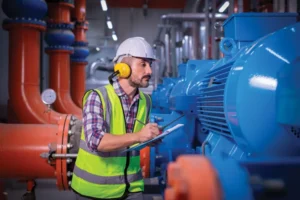
7. Motor and Electrical Problems
Pump reliability also depends on the condition of its electric motor and power supply.
Electrical or motor-related problems may include:
- Phase imbalance
- Voltage fluctuations
- Motor overheating
- Insulation deterioration
- Excessive starting frequency
- Incorrect motor sizing
Maintenance solutions:
Inspect electrical connections, monitor motor temperature and current, and perform appropriate insulation and electrical tests. Verify that motor protection devices and variable frequency drives are configured correctly for the application.
8. Corrosion and Impeller Wear
Pumps operating with corrosive, abrasive, or contaminated fluids may experience internal component deterioration.
This can reduce hydraulic efficiency, increase clearances, and eventually cause equipment failure.
Maintenance solutions:
- Select materials compatible with the process fluid.
- Inspect impellers and internal surfaces.
- Monitor changes in pump performance.
- Review fluid composition and operating conditions.
- Replace damaged components when necessary.
Material selection should consider corrosion resistance, abrasion, temperature, and the specific characteristics of the pumped medium.
Industrial Pump Maintenance Checklist
A consistent inspection routine helps maintenance teams identify developing problems and maintain pump performance.
| Inspection item | What to check |
|---|---|
| Vibration | Abnormal vibration and mechanical noise |
| Bearings | Temperature, lubrication, and wear |
| Mechanical seals | Leakage and seal condition |
| Suction system | Pressure, restrictions, and strainer condition |
| Discharge system | Flow rate and discharge pressure |
| Motor | Temperature, current, and electrical condition |
| Impeller | Wear, corrosion, and damage |
| Foundation | Alignment, mounting bolts, and structural condition |
Inspection frequency should be determined by equipment criticality, operating conditions, manufacturer recommendations, and the plant’s maintenance strategy.
Preventive and Predictive Maintenance for Industrial Pumps
Preventive and predictive maintenance can work together to improve pump reliability.
Preventive maintenance uses planned inspections and servicing based on time or operating hours. Predictive maintenance uses equipment condition and performance data to identify potential failures.
For critical pumping systems, combining scheduled inspections with vibration analysis, temperature monitoring, and performance measurements can provide a more comprehensive maintenance approach.
The appropriate strategy depends on the pump’s role, operating environment, failure consequences, and available monitoring technology.
Industrial pump maintenance is a key part of reliable plant operation. Cavitation, seal leakage, bearing failure, excessive vibration, reduced flow, overheating, electrical problems, and internal wear are among the issues that can affect pump performance.
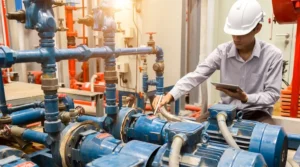
By combining routine inspections, accurate instrumentation, condition monitoring, and timely maintenance, industrial facilities can reduce equipment failures and improve operational reliability.
At Phakarin, we understand the importance of dependable industrial equipment and coordinated maintenance solutions in supporting continuous and efficient plant operations.


