Industrial valves are essential components in process control systems, regulating the flow, pressure, and direction of liquids, gases, and other process media. They are widely used in oil and gas, petrochemical, power generation, water treatment, and manufacturing facilities.
Selecting the right industrial valves is critical for maintaining process efficiency, operational safety, and equipment reliability. Different valve designs serve different purposes, and choosing an unsuitable type can lead to leakage, pressure losses, flow restrictions, or premature equipment failure.
Understanding the main valve types, their applications, and their technical requirements helps engineering and procurement teams make more informed equipment selection decisions.
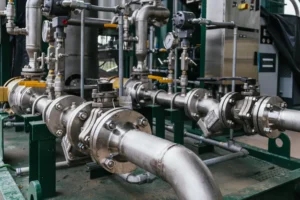
What Are Industrial Valves?
Industrial valves are mechanical devices designed to control or isolate the flow of fluids within a piping system.
Depending on their design and function, valves can:
- Start or stop fluid flow.
- Regulate flow rate.
- Control upstream or downstream pressure.
- Prevent reverse flow.
- Protect equipment against excessive pressure.
- Direct process media through different piping routes.
Valves can be operated manually, pneumatically, hydraulically, or electrically. The appropriate operating method depends on process requirements, automation architecture, safety considerations, and operating conditions.
1. Gate Valves
Gate valves are primarily designed for fully opening or fully closing fluid flow. They use a movable gate that travels vertically into or out of the flow path.
When fully open, gate valves provide a relatively unrestricted flow passage and typically create low pressure drop.
Common applications:
- Oil and gas pipelines
- Water distribution systems
- Industrial process piping
- Power generation facilities
Key characteristics:
- Suitable for isolation applications
- Low flow resistance when fully open
- Available in different pressure classes and materials
- Generally not recommended for continuous flow throttling
Gate valves are commonly selected when reliable isolation is required rather than frequent flow regulation.
2. Globe Valves
Globe valves are designed to regulate and control fluid flow. Their internal structure allows the flow rate to be adjusted by moving a disc against a stationary seat.
Compared with gate valves, globe valves generally provide better throttling capability but create a higher pressure drop.
Common applications:
- Steam systems
- Cooling water circuits
- Process control lines
- Industrial utility systems
Key characteristics:
- Effective flow regulation
- Suitable for frequent adjustment
- Available in different body configurations
- Higher pressure drop than many isolation valve designs
Globe valves are suitable for applications where flow adjustment is an important operating requirement.
3. Ball Valves
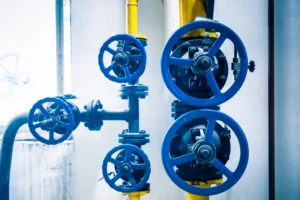
Ball valves use a rotating spherical element with a bore through its center. A quarter-turn movement opens or closes the flow passage.
They are widely used because of their simple operation, compact design, and effective shutoff performance.
Common applications:
- Oil and gas processing
- Chemical plants
- Water and utility systems
- Industrial fluid handling
Key characteristics:
- Fast quarter-turn operation
- Low flow resistance when fully open
- Compact design
- Available in different body and seat materials
Ball valves are frequently selected for isolation duties. Specialized designs are also available for demanding services and automated applications.
4. Butterfly Valves
Butterfly valves control flow through a rotating disc positioned inside the valve body. The disc rotates approximately 90 degrees between the open and closed positions.
Their relatively lightweight construction makes them suitable for large-diameter piping systems.
Common applications:
- Water and wastewater treatment
- HVAC systems
- Cooling water circuits
- Industrial utility pipelines
Key characteristics:
- Compact and lightweight design
- Suitable for large pipe diameters
- Quarter-turn operation
- Available in different seat and disc materials
Butterfly valves are often selected when space, weight, and installation cost are important considerations.
5. Check Valves
Check valves are designed to allow flow in one direction while preventing reverse flow. They operate automatically based on fluid pressure and flow conditions.
Preventing reverse flow can help protect pumps, compressors, and other process equipment.
Common applications:
- Pump discharge lines
- Water treatment systems
- Industrial pipelines
- Compressor and process systems
Key characteristics:
- Automatic operation
- No external actuator normally required
- Helps prevent reverse flow
- Available in swing, lift, dual-plate, and other configurations
The correct check valve design should be selected based on flow conditions, installation orientation, pressure requirements, and the potential for water hammer or dynamic instability.
6. Control Valves
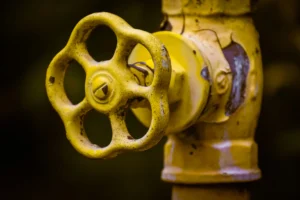
Control valves regulate process variables by adjusting fluid flow in response to signals from a control system.
They are commonly used with pneumatic, electric, or hydraulic actuators and positioners.
Common applications:
- Pressure control systems
- Temperature regulation
- Flow control loops
- Level control applications
- Petrochemical and power generation processes
Key characteristics:
- Designed for modulating control
- Can operate with automated control systems
- Available in different trim and body configurations
- Require application-specific sizing and selection
Control valve selection involves evaluating flow characteristics, pressure drop, fluid properties, cavitation risk, noise, actuator requirements, and control performance.
7. Pressure Relief Valves
Pressure relief valves are safety devices designed to protect pressurized equipment and systems from excessive pressure.
When the pressure reaches a defined set point, the valve opens to discharge fluid and help prevent pressure from exceeding the permitted limit.
Common applications:
- Pressure vessels
- Boilers
- Compressors
- Pumping systems
- Oil and gas processing facilities
Key characteristics:
- Protect equipment against overpressure
- Designed around specific pressure and capacity requirements
- Available in different configurations
- Require appropriate sizing and certified application-specific selection
Pressure relief valve selection must consider the required relieving capacity, set pressure, backpressure, process fluid, temperature, and applicable safety codes.
Industrial Valve Types at a Glance
| Valve Type | Main Function | Typical Applications |
|---|---|---|
| Gate Valve | On/off isolation | Pipelines and process systems |
| Globe Valve | Flow regulation | Steam and utility systems |
| Ball Valve | Fast isolation | Oil, gas, and chemical systems |
| Butterfly Valve | Isolation and regulation | Water and large pipelines |
| Check Valve | Preventing reverse flow | Pump discharge lines |
| Control Valve | Automated process control | Flow, pressure, and temperature loops |
| Pressure Relief Valve | Overpressure protection | Pressure vessels and process equipment |
6 Critical Factors for Industrial Valve Selection
Selecting industrial valves requires more than identifying the required valve type. Engineering teams must evaluate the actual process conditions and project specifications.
1. Operating Pressure and Temperature
The valve body, pressure rating, trim, and sealing materials must be suitable for the operating and design pressure and temperature.
The selected pressure class should be verified against the applicable pressure-temperature rating.
2. Fluid Characteristics
The process medium has a direct impact on valve materials and internal design.
Important considerations include:
- Fluid composition
- Corrosiveness
- Viscosity
- Abrasive particles
- Gas or liquid phase
- Potential for scaling or contamination
3. Valve Size and Flow Capacity
Valve sizing should be based on the required flow rate and system pressure conditions.
For control valves, the flow coefficient (Cv or Kv) is an important sizing parameter. Incorrect sizing can affect controllability, pressure drop, and overall process performance.
4. Material Compatibility
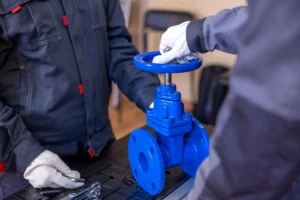
Valve body, trim, seat, and sealing materials must be compatible with the process medium and operating environment.
For corrosive or high-temperature applications, material selection should receive particular attention.
5. Operating and Automation Requirements
Engineering teams should determine whether the valve will be manually operated or integrated into an automated control system.
For actuated valves, important factors include:
- Actuator type
- Required operating torque or thrust
- Fail-open or fail-closed requirements
- Control signal compatibility
- Position feedback
- Available power or instrument air
6. Standards and Certifications
Industrial valves may need to comply with project-specific and industry standards.
Depending on the valve type and application, relevant standards may include:
- API standards
- ASME standards
- ISO standards
- IEC requirements
- Applicable pressure equipment regulations
The required standards and certifications should be confirmed in the project specifications and verified through supplier documentation.
Common Industrial Valve Selection Mistakes
Incorrect valve selection can create operational and maintenance challenges.
Some common mistakes include:
- Selecting a valve based only on nominal pipe size.
- Ignoring operating pressure and temperature.
- Choosing unsuitable materials for the process fluid.
- Using isolation valves for continuous throttling.
- Incorrectly sizing control valves.
- Overlooking actuator and control system compatibility.
- Failing to verify required standards and certifications.
A structured technical review can help identify these issues before procurement and installation.
Industrial valves play a critical role in controlling flow, maintaining process stability, and protecting industrial equipment. Gate, globe, ball, butterfly, check, control, and pressure relief valves each serve specific functions across industrial applications.
Selecting the right valve requires a clear understanding of operating conditions, fluid characteristics, pressure and temperature requirements, material compatibility, flow capacity, and automation needs.
At Phakarin, we recognize that reliable industrial equipment selection starts with understanding the application and matching technical specifications with actual project requirements. A well-planned valve selection process supports safer operation, improved process performance, and long-term equipment reliability.


