Pressure Transmitters in Oil and Gas Applications
Pressure transmitter applications play an essential role in oil and gas operations by providing reliable process measurements for monitoring, control, and operational safety. From upstream production facilities to downstream processing plants, pressure transmitters help operators understand process conditions, maintain stable operation, and detect abnormal changes in industrial systems.
In oil and gas facilities, pressure measurement is required across pipelines, separators, storage systems, compressors, pumps, and processing equipment. Selecting the right transmitter requires more than matching a pressure range. Engineers must consider process conditions, measurement accuracy, materials, installation requirements, environmental conditions, and compatibility with control systems.
This guide explains how pressure transmitters work, where they are used in oil and gas facilities, and which technical factors should be considered during equipment selection.
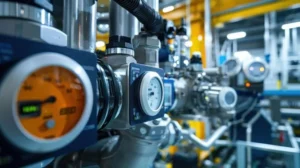
What Is a Pressure Transmitter?
A pressure transmitter is an industrial instrument that measures the pressure of a gas, liquid, or process medium and converts the measurement into a standardized output signal for monitoring or control systems.
Most industrial pressure transmitters use a sensing element that responds to changes in applied pressure. The instrument processes this response and converts it into an electrical signal that can be interpreted by a PLC, DCS, SCADA system, or other control equipment.
Common output and communication options include:
- 4–20 mA analog output
- HART communication
- Foundation Fieldbus
- PROFIBUS PA
- Digital communication options supported by the instrument
The appropriate output depends on the project architecture, control system requirements, instrument specifications, and plant communication standards.
How Does a Pressure Transmitter Work?
A pressure transmitter typically uses a sensing element such as a diaphragm, which responds to pressure applied by the process medium.
The sensor converts the mechanical response into an electrical signal. Internal electronics then process and scale the measurement according to the configured pressure range.
For example, a transmitter configured for a range of 0 to 10 bar may use a 4–20 mA output, where:
- 4 mA represents the lower range value.
- 12 mA represents the midpoint.
- 20 mA represents the upper range value.
The control system receives this signal and displays the measured pressure or uses it as an input for process control, alarms, and other programmed functions.
Actual signal behavior, diagnostics, and configuration depend on the transmitter model and the selected communication protocol.
Main Types of Pressure Transmitters
Different pressure measurement requirements call for different transmitter configurations.
1. Gauge Pressure Transmitters
Gauge pressure transmitters measure pressure relative to the surrounding atmospheric pressure.
They are commonly used for monitoring:
- Pump discharge pressure
- Pipeline pressure
- Vessel pressure
- Compressor discharge pressure
- Utility systems
Gauge pressure measurement is appropriate when the process requirement is based on pressure above or below local atmospheric pressure.
2. Absolute Pressure Transmitters
Absolute pressure transmitters measure pressure relative to a perfect vacuum.
They are useful in applications where atmospheric pressure variations must not affect the measurement, including:
- Vacuum systems
- Distillation processes
- Condensers
- Certain gas processing applications
- Low-pressure process systems
3. Differential Pressure Transmitters
Differential pressure transmitters measure the difference between two pressure points.
They are widely used for:
- Flow measurement with primary elements such as orifice plates
- Filter and strainer monitoring
- Pressure drop measurement across equipment
- Liquid level measurement in suitable closed vessels
- Process condition monitoring
For example, measuring the pressure difference across an orifice plate can help determine flow rate when combined with the appropriate primary element, fluid properties, and calculation method.
4. High-Pressure Transmitters
High-pressure transmitters are designed for applications with elevated operating pressures. They may be required in wellhead systems, high-pressure pipelines, hydraulic systems, and specialized process equipment.
The selected instrument must be suitable for the maximum operating and design pressure, including relevant transient conditions.
Key Pressure Transmitter Applications in Oil and Gas
1. Pipeline Pressure Monitoring
Pressure transmitters are installed at strategic points along oil and gas pipelines to monitor operating pressure and identify abnormal process conditions.
Measurements can help operators:
- Monitor pipeline operating conditions
- Identify unexpected pressure changes
- Support pump and compressor control
- Detect potential restrictions or abnormal pressure drops
- Provide data for operational monitoring systems
Instrument location and measurement range should be determined through the pipeline design and process requirements.
2. Separator Pressure Control
Separators are used to separate oil, gas, and water during production and processing.
Pressure transmitters provide measurement signals that can be used by control systems to maintain the required operating pressure.
Reliable pressure measurement supports stable separator operation and helps operators respond to process disturbances.
3. Compressor Monitoring
Compressors are essential in gas production, transportation, and processing.
Pressure transmitters may be used to monitor:
- Suction pressure
- Discharge pressure
- Interstage pressure
- Pressure conditions in associated process lines
These measurements support compressor control, performance monitoring, and protective functions when integrated into the appropriate control and safety architecture.
4. Pump and Process Equipment Monitoring
Pressure measurement is also important around pumps, heat exchangers, filters, and other process equipment.
For example, monitoring pressure upstream and downstream of a filter can help identify increasing pressure drop caused by accumulated contamination.
Pressure measurements around pumps can provide useful operating information, but they should be interpreted together with flow, temperature, equipment characteristics, and operating conditions.
5. Storage Tank and Vessel Applications
Pressure transmitters are used in selected storage and process vessel applications to monitor internal pressure.
For closed vessels, differential pressure transmitters may also be used for level measurement when the installation, fluid density, and vessel configuration are properly considered.
The transmitter configuration must account for vapor pressure, liquid density, elevation differences, and possible changes in process conditions.
Critical Factors When Selecting a Pressure Transmitter
Choosing a pressure transmitter requires a structured review of the process and installation requirements.
1. Pressure Range and Overpressure
The measurement range should cover the normal operating conditions while allowing sufficient margin for expected process variations.
Engineers should review:
- Normal operating pressure
- Minimum and maximum operating pressure
- Design pressure
- Potential pressure surges
- Overpressure limits
- Required measurement resolution
Selecting an unnecessarily wide range can reduce the effective resolution of the measurement. Selecting an insufficient range can expose the instrument to conditions beyond its rated capability.
2. Process Temperature
Temperature can affect sensor performance, electronics, seals, and materials.
The selection process should consider both process temperature and ambient temperature. Where process temperatures exceed the instrument’s limits, suitable remote seals or other engineered arrangements may be required.
3. Process Media and Wetted Materials
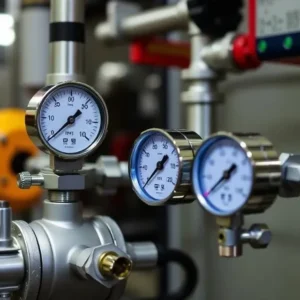
The materials in contact with the process medium must be compatible with the fluid and the expected operating environment.
Consider:
- Chemical composition
- Corrosive properties
- Hydrogen sulfide exposure where applicable
- Moisture and contaminants
- Potential erosion
- Required diaphragm and seal materials
Material compatibility should be confirmed against project specifications and relevant material requirements.
4. Accuracy and Stability
Measurement accuracy requirements depend on the application.
A monitoring point may have different accuracy requirements from a measurement used for process control, custody transfer, or a critical protective function.
Review the manufacturer’s stated accuracy, long-term stability, calibration requirements, and performance under the expected operating conditions.
5. Hazardous Area Requirements
Oil and gas facilities may contain hazardous areas where flammable gases or vapors can be present.
Instruments installed in these areas may require suitable protection concepts and certifications, such as intrinsic safety or explosion protection, depending on the area classification and applicable regulations.
Always verify that the complete installation—including the transmitter, wiring, barriers, glands, and accessories—meets the project hazardous-area requirements.
6. Output Signal and Control System Compatibility
Before selecting an instrument, confirm that its output and communication capabilities are compatible with the plant control architecture.
Important considerations include:
- 4–20 mA signal requirements
- HART communication
- Fieldbus or digital communication requirements
- PLC or DCS input compatibility
- Power supply
- Wiring and termination
- Configuration and diagnostic requirements
Compatibility should be checked at both instrument and system levels.
7. Installation and Maintenance Requirements
Installation conditions can influence measurement reliability and long-term maintenance.
Review:
- Process connection type
- Mounting arrangement
- Impulse line requirements, where applicable
- Accessibility for calibration
- Vibration exposure
- Environmental protection
- Manifold and isolation valve requirements
- Availability of spare parts and technical support
A technically suitable transmitter should also be practical to install, inspect, and maintain throughout its service life.
Pressure Transmitter Installation: Important Considerations
Correct installation is essential for obtaining reliable measurements.
Before installation, engineering and site teams should verify the instrument location, process connection, pressure range, orientation, and access requirements.
For differential pressure installations, impulse line routing, elevation differences, condensate management, and manifold configuration may influence the measurement.
Additional checks should include:
- Confirming the process connection and pressure rating
- Verifying instrument tag and datasheet details
- Inspecting the transmitter and accessories before installation
- Checking wiring and grounding requirements
- Confirming calibration and configuration
- Performing loop checks
- Verifying the displayed reading against expected process conditions
Installation and commissioning procedures should follow the manufacturer’s instructions and the approved project documentation.
Leading Pressure Transmitter Manufacturers
Several established manufacturers offer pressure measurement instruments for industrial and process applications.
Examples include:
- Emerson: Rosemount pressure measurement instruments for a range of process applications.
- Yokogawa: Industrial pressure transmitters and differential pressure measurement solutions.
- ABB: Pressure measurement instruments for process industries.
- Siemens: Pressure measurement products for industrial automation and process applications.
The best choice depends on the technical specification, process conditions, required certifications, control system compatibility, lifecycle support, and project requirements.
Brand selection alone does not establish suitability. Each proposed model should be evaluated against the approved datasheet and application requirements.
Common Pressure Transmitter Selection Mistakes
Some common mistakes can result in unreliable measurement, additional maintenance, or project delays:
- Selecting a transmitter based only on nominal pressure.
- Ignoring maximum pressure and potential pressure surges.
- Overlooking process media compatibility.
- Failing to verify hazardous-area requirements.
- Choosing an output signal that is incompatible with the control system.
- Ignoring installation conditions and accessories.
- Using an unsuitable pressure range.
- Failing to define calibration and documentation requirements.
A structured technical review helps identify these issues before equipment procurement and installation.
Pressure transmitter applications are fundamental to process monitoring and control across oil and gas facilities. Reliable pressure measurement supports pipeline monitoring, separator control, compressor operation, and the performance of many other industrial systems.
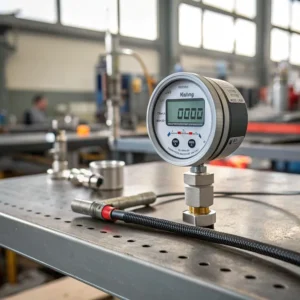
Selecting the right instrument requires a complete understanding of process conditions, pressure range, material compatibility, accuracy, hazardous-area requirements, installation, and control system interfaces.
Phakarin supports industrial projects through engineering coordination, instrumentation and automation solutions, and industrial procurement services . By connecting technical requirements with suitable equipment sourcing, project teams can make more informed decisions throughout the procurement process.
Need support with industrial instrumentation or equipment procurement? Contact Phakarin to discuss your project requirements.