Industrial equipment specifications play a critical role in determining whether equipment can operate safely, efficiently, and reliably within a specific project. Selecting equipment based only on brand reputation, price, or general product descriptions can lead to technical mismatches, installation difficulties, unexpected costs, and operational problems.
In industrial projects, every equipment selection must be evaluated against actual operating conditions, engineering requirements, and the intended application. A product that performs well in one facility may not be suitable for another due to differences in pressure, temperature, fluid properties, capacity, or control system requirements.
For engineering and procurement teams, matching Industrial Equipment Specifications with project requirements is therefore an essential step before approving a purchase.
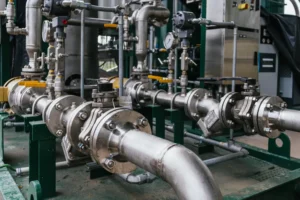
1. Understand the Actual Operating Conditions
The first step is to identify the conditions under which the equipment will operate.
Technical Industrial Equipment Specifications should be reviewed against the project’s operating parameters, including:
- Operating and design pressure
- Normal and maximum operating temperature
- Flow rate and process capacity
- Fluid composition and physical properties
- Ambient conditions
- Continuous or intermittent operating requirements
For example, a pump selected for a particular flow rate may still be unsuitable if its operating pressure, fluid compatibility, or temperature limitations do not match the process conditions.
Engineering teams should verify both normal operating conditions and possible operating extremes before approving equipment.
2. Verify Material Compatibility
Material selection directly affects equipment reliability, service life, and maintenance requirements.
Industrial Equipment Specifications may be exposed to corrosive fluids, abrasive particles, high temperatures, chemicals, or changing environmental conditions. Selecting unsuitable materials can result in corrosion, erosion, leakage, premature failure, or contamination.
Important considerations include:
- Process fluid composition
- Corrosion resistance
- Chemical compatibility
- Mechanical strength
- Temperature resistance
- Applicable material standards
For example, equipment used in petrochemical applications may require different material specifications from equipment installed in a general water treatment facility.
Material compatibility should always be evaluated in relation to the actual process environment.
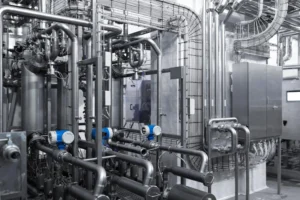
3. Check Capacity and Performance Requirements
Equipment must deliver the required performance without operating continuously beyond its recommended limits.
Depending on the equipment type, performance requirements may include:
- Pump flow rate and differential head
- Compressor capacity and discharge pressure
- Valve flow coefficient and pressure drop
- Motor power and torque
- Instrument measurement range and accuracy
- Heat exchanger thermal performance
Selecting equipment with insufficient capacity can restrict system performance. However, selecting significantly oversized equipment can also create problems, including inefficient operation, higher energy consumption, and additional procurement costs.
The objective is to select equipment that meets the project’s performance requirements under the expected operating conditions.
4. Confirm Standards and Technical Compliance
Industrial Equipment Specifications must comply with the technical specifications and standards applicable to the project.
Depending on the application, these may include:
- ASME requirements
- API standards
- IEC standards
- ISO standards
- ATEX requirements for applicable hazardous areas
- Project-specific engineering specifications
Compliance should not be assumed from a product brochure or supplier statement alone.
Procurement and engineering teams should review datasheets, certificates, technical documentation, inspection requirements, and applicable compliance declarations.
It is also important to confirm whether the project requires specific editions of standards or additional client engineering requirements.
5. Evaluate Control System and Interface Compatibility
Modern industrial facilities depend on communication between equipment, instruments, automation systems, and control platforms.
An equipment item may meet its mechanical requirements but still be unsuitable if it cannot integrate properly with the existing control architecture.
Before procurement approval, verify:
- Electrical supply requirements
- Signal types and communication protocols
- Instrumentation interfaces
- PLC, DCS, or SCADA compatibility
- Control and monitoring requirements
- Alarm and interlock interfaces
For example, a field instrument may provide the required measurement range but use an output or communication protocol that is incompatible with the plant’s existing automation system.
Early verification helps reduce integration work and avoid costly modifications during installation and commissioning.
6. Review Installation and Maintenance Requirements
Equipment selection should consider the entire operational lifecycle, not only the initial purchase.
Installation constraints and maintenance requirements can significantly affect project cost and long-term performance.
Review the following factors:
- Available installation space
- Equipment dimensions and weight
- Foundation and support requirements
- Piping and electrical connections
- Accessibility for inspection and maintenance
- Availability of spare parts
- Required maintenance intervals
- Manufacturer support
An equipment item that appears technically suitable may become impractical if it requires extensive modifications to the existing facility or difficult maintenance procedures.
Considering these factors during procurement can help reduce downtime and lifecycle costs.
7. Compare Supplier Offers Against the Technical Datasheet
Once the equipment requirements are established, supplier quotations should be evaluated against the approved technical specifications.
A lower-priced quotation does not necessarily represent the best technical or commercial option.
A structured technical bid evaluation should identify:
- Compliance with required specifications
- Technical deviations and exclusions
- Differences in materials and performance
- Included accessories and components
- Documentation and certification
- Delivery and inspection requirements
- Warranty and after-sales support
Every deviation should be clearly documented and reviewed by the responsible engineering team before commercial approval.
This process helps ensure that procurement decisions are based on technical suitability rather than price alone.
Common Mistakes in Industrial Equipment Selection
Several recurring mistakes can create problems during procurement and project execution:
| Common mistake | Potential consequence |
|---|---|
| Selecting equipment based only on brand | Technical mismatch |
| Ignoring actual operating conditions | Poor performance |
| Overlooking material compatibility | Premature equipment failure |
| Not checking control interfaces | Integration difficulties |
| Comparing quotations without technical evaluation | Hidden deviations |
| Ignoring maintenance accessibility | Higher lifecycle costs |
| Reviewing documentation too late | Project delays |
Avoiding these mistakes requires coordination between engineering, procurement, suppliers, and project management teams.
Matching industrial equipment specifications with project requirements is a fundamental part of successful engineering and procurement.
Pressure, temperature, capacity, materials, compliance, automation compatibility, and maintenance requirements must all be evaluated before equipment approval.
A structured selection process helps reduce technical risks, prevent unnecessary modifications, and improve long-term operational reliability.
At Phakarin, we believe effective industrial procurement starts with understanding the project’s technical requirements and identifying equipment that meets the demands of its intended application.


