The Oil and Gas Industry in 2026: Key Sectors, Emerging Trends, and Future Opportunities
The oil and gas industry remains one of the most important pillars of the global energy system, supporting transportation, power generation, manufacturing, petrochemicals, and industrial infrastructure. Despite the accelerating transition toward renewable energy, oil and natural gas continue to play a significant role in meeting global energy demand.
However, the industry is undergoing substantial changes in 2026. Geopolitical tensions, energy security concerns, supply chain disruptions, stricter environmental requirements, and rapid technological developments are reshaping how oil and gas companies operate, invest, and manage their assets.
At the same time, digital transformation, artificial intelligence (AI), advanced automation, and industrial system integration are creating new opportunities to improve operational efficiency, equipment reliability, and production performance.
According to the Energy Institute’s Statistical Review of World Energy 2026, global energy supply increased by 1.7% in 2025, with all major energy sources reaching new record levels. This highlights the continued growth of global energy demand and the importance of maintaining a reliable and diversified energy supply.
This guide examines the three main sectors of the oil and gas industry, current market developments, emerging technologies, major operational challenges, and the opportunities shaping the industry’s future in 2026 and beyond.
1. Understanding the Three Main Sectors of the Oil and Gas Industry
The oil and gas industry is traditionally divided into three interconnected sectors: Upstream, Midstream, and Downstream. Each sector performs a specific function within the hydrocarbon value chain, from resource exploration to the delivery of finished products.
Understanding these sectors is essential for companies involved in engineering, equipment supply, procurement, maintenance, and industrial services.
Upstream: Exploration and Production
The upstream sector represents the initial stage of the oil and gas value chain. It focuses on identifying underground and offshore hydrocarbon resources and extracting crude oil and natural gas.
Major upstream activities include:
- Geological surveys and seismic exploration.
- Exploration drilling and reservoir evaluation.
- Development of onshore and offshore oil and gas fields.
- Well completion and production operations.
- Reservoir monitoring and production optimization.
- Artificial lift and well intervention services.
Upstream projects require substantial capital investment, advanced engineering capabilities, and specialized equipment.
Technological developments are increasingly transforming this sector. AI-powered reservoir analysis, advanced seismic imaging, automated drilling systems, and real-time production monitoring help operators improve resource identification and operational efficiency.
Key equipment and technologies:
- Drilling rigs and wellhead equipment.
- Blowout Preventers (BOPs).
- Pressure and temperature transmitters.
- Flow meters and control valves.
- Pumps and compressors.
- Distributed Control Systems (DCS).
- Supervisory Control and Data Acquisition (SCADA).
In 2026, improving asset performance, reducing unplanned downtime, and optimizing production costs remain major priorities for upstream operators.
Midstream: Transportation, Processing, and Storage
The midstream sector connects upstream production facilities with downstream processing and refining operations.
Its primary responsibility is to transport, process, and store crude oil and natural gas safely and efficiently.
Major midstream activities include:
- Transportation of crude oil and natural gas through pipelines.
- Natural gas processing and treatment.
- Liquefied Natural Gas (LNG) production and transportation.
- Oil and gas storage operations.
- Pipeline monitoring and integrity management.
- Gas compression and distribution infrastructure.
Pipelines remain a fundamental transportation method, while LNG carriers, tankers, rail systems, and trucks support international and regional energy transportation.
The growing importance of LNG infrastructure and international gas trade has increased demand for reliable processing facilities, storage systems, compression stations, and pipeline monitoring technologies.
Key equipment and technologies:
- Pipeline systems and fittings.
- Gas compressors and pumping stations.
- Metering skids and custody transfer systems.
- Pressure regulators and control valves.
- Gas detection and monitoring systems.
- Storage tanks and terminal equipment.
- Pipeline leak detection technologies.
In 2026, supply chain resilience, pipeline integrity, infrastructure security, and methane emission monitoring are particularly important considerations for midstream operators.
Downstream: Refining, Processing, and Distribution
The downstream sector represents the final stage of the oil and gas value chain.
It focuses on converting crude oil and natural gas into usable products and distributing them to industrial, commercial, and consumer markets.
Major downstream activities include:
- Crude oil refining.
- Natural gas processing and purification.
- Petrochemical production.
- Fuel blending and storage.
- Product distribution and transportation.
- Refinery maintenance and operational optimization.
Refineries transform crude oil into products such as gasoline, diesel, jet fuel, heating oil, lubricants, and asphalt.
Natural gas processing facilities also produce valuable products such as ethane, propane, butane, and other natural gas liquids.
Key equipment and technologies:
- Industrial heat exchangers.
- Distillation columns and process vessels.
- Industrial pumps and compressors.
- Control valves and instrumentation.
- Industrial automation systems.
- Process control and safety systems.
- Electrical and power distribution equipment.
In 2026, downstream companies are increasingly focused on operational flexibility, energy efficiency, equipment reliability, and maintaining stable production amid changing feedstock availability and market conditions.
2. Major Products and Global Importance of the Oil and Gas Industry
The importance of the oil and gas industry extends far beyond fuel production.
Hydrocarbons are essential raw materials for numerous industrial processes and manufacturing activities. Petroleum and natural gas derivatives are used in products that support modern infrastructure, healthcare, agriculture, transportation, and consumer industries.
Beyond Fuels: Industrial Applications of Petroleum and Natural Gas
Major applications include:
- Petrochemicals: Production of plastics, synthetic fibers, resins, and industrial chemicals.
- Agriculture: Natural gas-based ammonia and fertilizers.
- Healthcare: Pharmaceutical ingredients, medical materials, and specialized packaging.
- Construction: Asphalt, insulation materials, coatings, and industrial polymers.
- Manufacturing: Lubricants, solvents, synthetic materials, and industrial feedstocks.
- Transportation: Gasoline, diesel, aviation fuel, and marine fuels.
Natural gas also plays an important role in electricity generation, industrial heating, and chemical manufacturing.
As a result, the oil and gas industry remains closely connected to multiple global supply chains, making its reliability and operational performance important to industrial development.
3. The State of the Oil and Gas Industry in 2026
The oil and gas industry entered 2026 amid significant uncertainty. Although long-term energy demand continues to be shaped by industrial growth, electrification, and technological development, short-term market conditions have been heavily influenced by geopolitical disruptions and supply constraints.
Global Oil Market Developments
According to the International Energy Agency (IEA) October 2026 Oil Market Report, global oil demand is forecast to decline by approximately 2.6 million barrels per day in 2026 compared with 2025.
The report identifies geopolitical disruptions, restricted product availability, higher fuel prices, and weaker economic conditions as major factors affecting consumption.
These developments have also placed pressure on refining operations, international transportation, and petroleum product supply chains.
For oil and gas companies, the current market environment highlights several priorities:
- Improving supply chain flexibility.
- Managing exposure to international transportation disruptions.
- Maintaining reliable production and refining operations.
- Optimizing procurement and inventory strategies.
- Strengthening operational and infrastructure security.
Oil market conditions should therefore be evaluated through both long-term demand fundamentals and short-term geopolitical risks.
Natural Gas and LNG Market Developments
Natural gas remains an important component of global energy supply, particularly in electricity generation, industrial heating, and petrochemical production.
However, 2026 has brought additional uncertainty to international gas markets.
The IEA’s Gas Market Report for Q3 2026 indicates that global natural gas demand is expected to decline by approximately 0.5% during the year, reflecting supply disruptions, higher prices, and weaker consumption in several major markets.
LNG infrastructure has become especially important in this environment.
Liquefaction facilities, export terminals, LNG carriers, regasification plants, and gas distribution networks are essential to maintaining international supply flexibility.
For engineering and procurement companies, these developments create ongoing requirements for:
- LNG processing equipment.
- Gas compression systems.
- Pipeline instrumentation.
- Pressure and temperature control systems.
- Industrial valves and metering equipment.
- Gas detection and safety systems.
The expansion and modernization of natural gas infrastructure will remain an important area of industrial investment, although project execution and market conditions will vary significantly by region.
4. Major Trends Transforming the Oil and Gas Industry in 2026
The industry’s transformation is no longer limited to energy transition initiatives. Technology, operational efficiency, environmental performance, and supply chain management are becoming equally important.
4.1 Artificial Intelligence and Digital Transformation
Artificial intelligence is increasingly being applied across upstream, midstream, and downstream operations.
Oil and gas companies are using AI-powered analytics to process operational data, identify inefficiencies, improve production planning, and support maintenance decisions.
Key applications include:
- Predictive maintenance for rotating equipment.
- AI-assisted reservoir characterization.
- Automated drilling optimization.
- Real-time process monitoring.
- Production forecasting.
- Equipment failure detection.
- Supply chain and inventory optimization.
AI becomes particularly valuable when integrated with industrial automation infrastructure, including DCS, SCADA, PLC, and Industrial Internet of Things (IIoT) platforms.
For example, combining sensor data with predictive analytics can help operators identify abnormal equipment conditions before they develop into major failures.
4.2 Industrial Automation and System Integration
Modern oil and gas facilities depend on interconnected control, instrumentation, electrical, and safety systems.
As facilities become more complex, system integration plays an increasingly important role in maintaining reliable and coordinated operations.
Important technologies include:
- Distributed Control Systems (DCS).
- Supervisory Control and Data Acquisition (SCADA).
- Programmable Logic Controllers (PLC).
- Safety Instrumented Systems (SIS).
- Industrial communication networks.
- Advanced process control systems.
- Remote monitoring and control platforms.
Effective system integration improves communication between equipment and control platforms, supports process visibility, and helps operators manage complex industrial facilities.
4.3 Digital Twins and Predictive Maintenance
Digital Twin technology is becoming an important tool for improving asset management and operational planning.
A digital twin creates a virtual representation of physical equipment, systems, or industrial facilities using operational data and engineering information.
In oil and gas applications, digital twins can support:
- Equipment performance monitoring.
- Asset lifecycle management.
- Maintenance planning.
- Process simulation.
- Operational risk assessment.
- Energy efficiency optimization.
Combined with predictive maintenance technologies, digital twins can help reduce unexpected equipment failures and improve the reliability of critical assets.
4.4 Methane Management and Emissions Reduction
Reducing methane emissions has become a major operational and regulatory priority.
According to the IEA’s Global Methane Tracker 2026, oil, gas, and coal operations generated an estimated 124 million tonnes of methane emissions in 2025.
Within the oil and gas sector, upstream activities account for approximately 80% of methane emissions.
This has increased attention on technologies and operational practices such as:
- Leak Detection and Repair (LDAR).
- Continuous methane monitoring.
- Optical gas imaging.
- Gas recovery and vapor recovery systems.
- Low-emission pneumatic equipment.
- Improved flare management.
- Pipeline integrity monitoring.
Methane management is increasingly becoming part of asset performance, environmental compliance, and operational risk management.
4.5 Energy Efficiency and Carbon Capture Technologies
Oil and gas companies are also exploring ways to reduce emissions from their own operations.
Carbon Capture, Utilization, and Storage (CCUS) is one of the technologies receiving continued attention.
CCUS systems capture carbon dioxide from industrial processes or other emission sources, allowing it to be transported, utilized, or stored in suitable geological formations.
Other operational initiatives include:
- Electrification of selected industrial processes.
- Energy-efficient compressors and pumps.
- Waste heat recovery.
- Improved process optimization.
- Reduced gas flaring.
- Integration of lower-carbon energy sources.
These initiatives require specialized engineering, instrumentation, process control, and industrial equipment.
5. Major Challenges Facing the Oil and Gas Industry
Despite technological improvements and continuing investment, the industry faces several interconnected challenges.
Geopolitical Risks and Energy Security
Oil and gas markets are particularly sensitive to geopolitical developments.
Conflicts, sanctions, trade restrictions, and disruptions to strategic transportation routes can affect production, international shipping, commodity prices, and equipment availability.
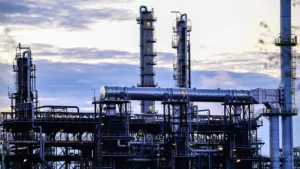
The developments affecting the Strait of Hormuz in 2026 demonstrate how disruptions to a major energy transportation corridor can influence global oil and LNG markets.
For operators and procurement teams, these conditions highlight the importance of:
- Diversifying supply sources.
- Evaluating alternative manufacturers.
- Improving inventory planning.
- Monitoring international logistics risks.
- Developing contingency procurement strategies.
Environmental Regulations and Compliance
Environmental requirements are becoming more demanding across major energy markets.
Oil and gas companies must increasingly address emissions reporting, methane monitoring, environmental performance, and equipment compliance.
This requires investment in monitoring systems, industrial instrumentation, process optimization, and emissions reduction technologies.
Aging Infrastructure and Equipment Reliability
Many oil and gas facilities operate with equipment and infrastructure that have been in service for decades.
Aging pipelines, compressors, pumps, electrical systems, and instrumentation can increase the risk of unplanned shutdowns and operational failures.
Maintenance and overhaul programs are therefore essential to maintaining asset reliability.
Key priorities include:
- Equipment condition assessment.
- Preventive and predictive maintenance.
- Spare parts availability.
- Instrument calibration.
- Control system upgrades.
- Replacement of obsolete components.
- Turnaround and shutdown planning.
Supply Chain and Procurement Complexity
Industrial procurement remains a major challenge for oil and gas operators.
Specialized equipment often requires strict technical specifications, manufacturer verification, certification, and compatibility assessments.
International sourcing can also introduce additional challenges involving transportation, customs procedures, delivery schedules, and supplier reliability.
A structured procurement strategy is essential to reducing sourcing risks and supporting project execution.
6. Future Outlook: Opportunities for the Oil and Gas Industry Beyond 2026
The future of the oil and gas industry will be influenced by the interaction between energy security, technological innovation, environmental requirements, and changing global demand patterns.
Although the pace and direction of change will differ across regions, several areas are expected to remain important.
Continued Investment in Natural Gas and LNG Infrastructure
Natural gas infrastructure will remain strategically important for countries seeking reliable energy supplies and diversified energy sources.
Potential areas of investment include:
- LNG liquefaction and regasification facilities.
- Gas processing plants.
- Pipeline infrastructure.
- Gas storage facilities.
- Compression stations.
- Industrial gas distribution systems.
Modernization of Existing Industrial Facilities
Upgrading existing assets represents an important opportunity for engineering and industrial service companies.
Rather than relying exclusively on new facility development, operators are increasingly evaluating ways to improve existing infrastructure through automation upgrades, equipment replacement, and system integration.
Advanced Industrial Procurement and Supply Chain Management
The complexity of industrial projects is increasing the importance of specialized procurement capabilities.
Companies need suppliers and procurement partners capable of understanding technical requirements, identifying suitable manufacturers, coordinating documentation, and managing international supply operations.
Reliable sourcing of instrumentation, automation equipment, mechanical components, electrical systems, and industrial spare parts will remain essential to project execution.
Expansion of Maintenance and Asset Reliability Services
As industrial facilities become more technologically advanced, equipment reliability and lifecycle management will remain key priorities.
Maintenance, inspection, calibration, overhaul, and commissioning services will continue to support safe and efficient operations.
Growth of Industrial Digitalization
The integration of AI, IIoT, automation, and digital asset management is expected to create further opportunities for companies involved in industrial engineering and technology solutions.
Organizations that successfully combine engineering expertise with digital capabilities will be better positioned to improve operational performance and manage complex industrial assets.
7. The Role of Engineering, Procurement, and System Integration in the Oil and Gas Industry
The successful operation of oil and gas facilities depends on more than exploration, production, and refining.
Behind every industrial project is a complex network of engineering contractors, equipment manufacturers, technology providers, procurement specialists, and service companies.
Three capabilities are particularly important.
Engineering and Technical Solutions
Engineering expertise helps define equipment requirements, evaluate technical specifications, and develop solutions that meet operational and project requirements.
Industrial Procurement and Supply Chain
Effective procurement connects project requirements with qualified manufacturers and suppliers. It also supports technical evaluation, documentation, delivery coordination, and sourcing of specialized industrial equipment.
System Integration and Automation
Integrated automation and control systems help coordinate industrial processes, improve operational visibility, and support reliable facility performance.
Together, these capabilities contribute to more efficient project execution and long-term asset performance.
Conclusion: A Changing Industry with New Industrial Opportunities
The oil and gas industry in 2026 is operating in an increasingly complex environment.
Geopolitical uncertainty, energy security concerns, environmental regulations, technological innovation, and supply chain challenges are reshaping the industry’s priorities.
Although the global energy transition continues to accelerate, oil and natural gas remain important components of the industrial and energy landscape.
The companies best positioned to succeed will be those that combine technical expertise, operational reliability, digital capabilities, and effective procurement strategies.
For industrial engineering and supply chain organizations, these changes create opportunities to support energy projects through specialized equipment sourcing, automation, system integration, maintenance, and technical services.
At Phakarin, we recognize that reliable industrial operations depend on the right combination of engineering knowledge, technology, procurement, and execution.
Through our industrial solutions and supply chain capabilities, we support requirements across Oil & Gas, Petrochemical, Power Engineering, Water & Wastewater, Cement, and Steel & Mining industries.
Looking for reliable industrial solutions for your next oil and gas project?
Contact Phakarin to discuss your engineering, equipment procurement, and industrial supply requirements.
Frequently Asked Questions (FAQ)
1. What are the three main sectors of the oil and gas industry?
The three main sectors are Upstream, Midstream, and Downstream. Upstream focuses on exploration and production, Midstream handles transportation, processing, and storage, while Downstream covers refining, product processing, and distribution.
2. What are the major trends shaping the oil and gas industry in 2026?
Major trends include artificial intelligence, industrial automation, digital twins, predictive maintenance, LNG infrastructure development, methane emissions reduction, and advanced supply chain management.
3. How is AI transforming the oil and gas industry?
AI supports reservoir analysis, drilling optimization, predictive maintenance, production forecasting, process monitoring, and equipment failure detection. It helps operators make data-driven decisions and improve operational efficiency.
4. Why is LNG important to the global energy market?
Liquefied Natural Gas (LNG) enables natural gas to be transported over long distances by specialized vessels. It supports international gas trade, diversifies supply sources, and connects producing regions with major consumption markets.
5. What are the biggest challenges facing oil and gas companies in 2026?
Major challenges include geopolitical instability, supply chain disruptions, energy price volatility, environmental compliance, aging infrastructure, equipment reliability, and increasing operational costs.
6. What role does industrial procurement play in oil and gas projects?
Industrial procurement ensures that project operators obtain the required equipment, materials, and components according to technical specifications, quality standards, delivery schedules, and commercial requirements.
7. What is the future of the oil and gas industry?
The industry is expected to continue evolving through digitalization, automation, infrastructure modernization, emissions reduction, and improved asset management. Oil and natural gas will remain important to global energy and industrial systems, although demand and investment patterns will vary across regions.